
 VIP会员
VIP会员



内容简介
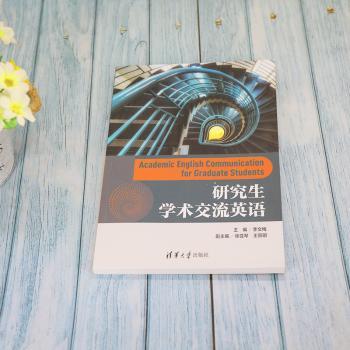
本书覆盖研究生主要学术活动括:学术英语的内涵和特征;学术英语问题自我诊断及解决途径;文献获取、文献管理和文献综述的工具和方法;如何聆听学术报告;如何辨析会议信息;如何开展学术目的的英语通信和交谈;如何进行学术会议报告;如何进行学术目的的英语提问与回答;如何用英语主持学术会议;师生如何共建模拟学术大会等。每个单元由教学目标、课前问题、学术英语困难情景、翻转课堂、对分课堂、课后反思与实践、语言工具箱构成,实现了课前、课中和课后无缝衔接。 本书可作为高等学校硕士生和博士生英语教材, 也可供其他需要提高英语学术交流能力的人员使用。
目录
Part One Approaching Academic EnglishUNIT 1 Getting Acquainted with Academic English...... 31.1 Overall Impression of Academic English..................................41.1.1 A Glance over Written Academic English..........................51.1.2 A Glimpse of Spoken Academic English............................71.2 Salient Features of Academic English.....................................101.2.1 Vocabulary........................................................................101.2.2 Hedging.............................................................................121.3 Differentiating Academic English & General English...........151.3.1 Main Features of Spoken Academic English....................161.3.2 Main Features of Written Academic English....................20UNIT 2 Cultivating Academic English Competencies..... 232.1 Diagnosing Your Academic English Language Competencies....242.1.1 Identifying General Problems with Your AcademicEnglish Communication....................................................252.1.2 Understanding Specific Academic EnglishCommunication Language Abilities Scales......................282.1.3 Locating the Gap Between Your Language Abilities andthe Standards.....................................................................322.2 Ways to Improve Academic Communication Competencies....342.2.1 Improving Academic Communication Language Abilities....342.2.2 Enhancing Academic English Non-language Abilities.....382.2.3 Grasping Essential Skills for Communication in theMain Oral Academic Scenarios........................................39Part Two Stepping into AcademiaUNIT 3 Accessing Academic English Literature........... 453.1 Literature Sources and Types..................................................463.1.1 Literature Sources.............................................................473.1.2 Major Literature Types......................................................493.2 Retrieval Databases, Methods and Strategies........................513.2.1 Retrieval Databases...........................................................513.2.2 Search Terms for Retrieval...............................................543.2.3 Retrieving Methods...........................................................563.2.4 Retrieving Strategies.........................................................593.3 Tra and Ordering Literature..........................................613.3.1 Literature Tra and Ordering Tools............................623.3.2 Challenges and Precautions..............................................64UNIT 4 Managing Academic English Literature.......... 674.1 Reference Management Tools..................................................684.1.1 Some English Literature Management Tools....................684.1.2 Main Features of English Literature Management Tools....694.2 Principles and Steps to Manage Academic English documents....714.2.1 Following Some Principles to Manage documents..........714.2.2 Managing documents in Pre-reading...............................724.2.3 Managing documents in Preliminary Reading.................734.2.4 Managing documents in In-depth Reading......................734.2.5 Managing documents in Writing......................................744.2.6 important Tips for Literature Management.......................75UNIT 5 Reviewing Academic English Literature......... 795.1 Selecting Sources.......................................................................805.1.1 Reviewing Literature........................................................815.1.2 evaluating Sources............................................................845.2 Structuring a Literature Review.............................................895.2.1 Contents of a Literature Review.......................................895.2.2 Ways of Grouping a Literature Review............................925.3 Citing Sources............................................................................945.3.1 Plagiarism.........................................................................955.3.2 Summarizing, Paraphrasing and Direct Quotation...........965.4 Following Academic Conventions in Referencing................1015.4.1 Styles of Referencing......................................................1015.4.2 Verbs of Referencing.......................................................103Part Three Basic Academic English CommunicationUNIT 6 Sitting in English Academic Lectures............ 1096.1 Be Active Listeners..................................................................1106.1.1 What Is Special of an Academic Lecture?......................1116.1.2 Focusing on Language Use Strategy in Lectures............1126.1.3 T Notes...................................................................1146.1.4 Identifying Topic Sentences............................................1176.2 evaluating While Listening....................................................1206.3 Raising Questions for Further Understanding.....................1256.3.1 Functions of A Questions.......................................1256.3.2 Purposes of A Questions........................................127UNIT 7 A and Answering Academic Questions.... 1317.1 Understanding Questions.......................................................1327.1.1 Reasons for A Questions........................................1337.1.2 Questioning in Q&A Session..........................................1337.2 A Questions.....................................................................1367.2.1 Template of A a Question.......................................1367.2.2 Types of Questions..........................................................1387.3 Answering Questions..............................................................1427.3.1 General Skills for Answering Questions.........................1437.3.2 Direct Answers................................................................1457.3.3 Avoidance........................................................................147UNIT 8 Corresponding for Academic Purposes......... 1558.1 Introduction of Academic Correspondence..........................1568.1.1 Definition of Academic Correspondence........................1568.1.2 Various Purposes of English Academic Correspondence....1578.2 Features of English Academic Correspondence...................1608.2.1 Formats of Academic Correspondence...........................1608.2.2 Language Features of Academic Correspondence..........1648.3 Writing Strategies in Academic Correspondence................1668.3.1 Use You-attitude Rather Than I-attitude.........................1668.3.2 More Communicative Strategies in Correspondence.....167Part Four Advanced Academic English CommunicationIdentifying International ConferenceUNIT 9 Information...................................................... 1799.1 Benefits of Attending International Academic Conferences....1809.2 Information Sources on International Academic Conferences....1859.3 Varieties of Academic Conferences........................................1879.4 Conference Information and Major Conference Activities.....1929.4.1 Conference Information..................................................1939.4.2 Major Conference Activities...........................................195UNIT 10 M a Paper Presentation...................... 19910.1 Structuring a Presentation...............................................20010.1.1 Opening...................................................................20110.1.2 Main Body..............................................................20410.1.3 Ending.....................................................................20510.2 Preparing a Presentation..................................................20810.2.1 Preparation Procedure.............................................20910.2.2 PowerPoint Design.................................................21210.3 Delivering a Presentation.................................................21510.3.1 Presentation Skills...................................................21510.3.2 Verbal expressions..................................................218UNIT 11 Initiating Free Exchanges with Academics.... 22511.1 Preparing a Talk with Professionals................................22611.1.1 Topic Choosing.......................................................22711.1.2 Information Collecting............................................22711.1.3 Idea Organizing and Outlining................................22811.2 Starting a Talk with Professionals...................................23011.2.1 Ta with Familiar Professionals.......................23011.2.2 Ta with Strangers............................................23111.3 Deepening the Topic..........................................................23111.4 Shifting the Topic..............................................................233UNIT 12 Presiding over a Session............................... 23512.1 Preparations Before the Session......................................23612.2 M an Opening Speech and Introducing a Speaker....23912.2.1 M an Opening Speech....................................24012.2.2 Introducing a Speaker.............................................24112.3 Q&A Sessions and Thank-You Speeches........................244Co-constructing a Simulated InternationalUNIT 13 Conference..................................................... 25113.1 The Significance of Co-constructing a SimulatedInternationalConference.................................................25213.1.1 Distinguishing the Varieties of InternationalConferences............................................................25313.1.2 Mastering the Whole Procedures of InternationalConferences............................................................25413.2 Major Sessions of Simulated International Conferences.....25513.2.1 Organization of an International Conference..........25613.2.2 Routine Work of Organizing an InternationalConference..............................................................25613.3 How to Co-construct a Simulated International Conference.....25713.3.1 To-do list at the Very Beginning of a SimulatedInternational Conference.........................................25813.3.2 Promoting a Simulated International Conference.....25913.3.3 Calling for Paper of a Simulated InternationalConference..............................................................26113.3.4 Invitation Letter of a Simulated InternationalConference..............................................................26213.3.5 Agenda of a Simulated International Conference.....26213.4 The evaluation of a Simulated International Conference.....264References................................................................................. 267_x00C_